
Wednesday, October 14, 2026 | Today's Newsletter | Login
Vancouver Has Had Enough of Managing Misery on Its Streets
By Mata Press Service
When Vancouverites go to the polls on Oct. 17, they will be asked to make more than a choice about who should run City Hall for the next four years.
They’ll also be asked whether the city should keep managing a street crisis we’ve all come to know too well or finally change course.
A public safety plebiscite brought forward by Mayor Ken Sim and his ABC Vancouver slate asks voters to answer two questions.
The first asks Vancouverites to back tougher laws and stronger enforcement, including the confiscation of hard drugs such as heroin, methamphetamine, fentanyl and crack, to curb their open use in public spaces.
The second asks Vancouver to press the province for a secure medical facility offering voluntary treatment and more than 100 involuntary care beds for people who pose a serious risk to themselves or others because of severe addiction or mental illness.
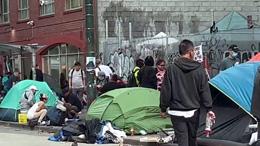
The two questions are really about the same thing. Vancouver has spent years coping with open drug use, untreated mental illness, homelessness, repeat property crime and street disorder, while many of the people at the centre of the crisis keep cycling through police cars, emergency rooms and shelters, and back onto the sidewalk.
Speaking at a meet and greet in Kitsilano last week, Sim pointed to one number that says it all: roughly 40 chronic and prolific individuals have racked up more than 6,300 negative interactions with Vancouver police.
Sit with that for a second. Forty people, more than 6,300 run-ins with police.
The system has met these people thousands of times and still hasn’t gotten them stable or made the blocks around them any safer.
Police keep getting sent to deal with addiction and psychosis, and shop owners, paramedics, ER nurses and outreach workers deal with what’s left. The people themselves end up right back where they started.
For years, Vancouverites have been told that compassion requires restraint and that intervention risks criminalizing illness. Yet there comes a point when standing back simply leaves people trapped in danger.
Watching someone overdose again and again until the day the ambulance gets there too late isn’t compassion. Neither is leaving someone in full psychosis to sleep in a doorway or wander into traffic.
At some point, “hands-off” just means abandoned. The second plebiscite question confronts that reality by calling for secure care with proper medical oversight, safeguards and humane treatment, rather than accepting the cycle of crisis Vancouver already knows too well.
The first question addresses the other side of the crisis, which is the right of ordinary citizens to use public spaces without accepting open hard-drug use as a permanent feature of city life.
Parks, sidewalks, playgrounds and neighbourhood streets belong to everyone. Families should be able to use them without navigating drug smoke or discarded paraphernalia. Seniors should not feel compelled to avoid certain blocks, and small businesses should not be expected to tolerate conditions outside their doors that governments would never accept at a school, hospital or public building.
Cracking down on open hard-drug use doesn’t mean turning on people with addiction. It means a kid walking to the playground shouldn’t have to step around needles.
Sim and ABC Vancouver have already made public safety a central part of their first term by fully funding police and fire services, supporting mental-health workers, removing dangerous encampments from East Hastings and directing more resources to areas including Chinatown, Gastown and Granville.
The results remain incomplete because much of the problem reaches beyond City Hall into provincial responsibility for health care, mental-health treatment and addiction services. A Yes vote on the plebiscite questions would give Vancouver a stronger public mandate to press Victoria for action.
Opponents have dismissed the plebiscite as political theatre, questioned its cost and argued that parts of it fall outside municipal jurisdiction. Some opposition councillors, including mayoral candidates Pete Fry and Rebecca Bligh, walked out before the council vote that put the questions before voters.
That walkout feels increasingly detached from people who’ve watched this crisis deepen while governments argue over responsibility.
A plebiscite cannot solve addiction and mental illness, but it can send a message that governments can no longer easily ignore.
Vancouver has spent years managing this crisis, with little progress to show for it.
On Oct. 17, Vancouverites can demand a different course.
They should vote Yes to both plebiscite questions and give Mayor Ken Sim and ABC Vancouver another term to turn that mandate into results.
Leave a comment