
Thursday, July 02, 2026 | Today's Newsletter | Login
Canada's Food Security Strategy Needs Salmon Aquaculture
Commentary
By Dallas Smith and Isaiah Robinson
As the Government of Canada unveils a national Food Security Strategy, it faces a simple question: where will Canadians get the affordable, healthy food they need in the years ahead?
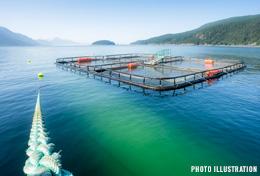
For coastal First Nations in British Columbia, part of the answer is already clear. Reverse the Trudeau-era 2029 transition away from net-pen salmon aquaculture and provide the certainty needed for responsible salmon farming to continue in our territories.
Earlier this spring, Chiefs, First Nations leaders and aquaculture partners travelled to Ottawa with a plan to strengthen Canada's food security, create jobs, advance economic reconciliation and unlock more than $1 billion in new investment. The proposal recognizes a simple reality: Canada cannot improve food security by reducing its capacity to produce food.
Every year, Canadian families consume approximately one million meals of farmed salmon. It is one of the healthiest and most sustainable sources of protein available to consumers. If salmon aquaculture disappears from British Columbia's coast, those meals will not be replaced by wild salmon.
The reality is that there are not enough fish in the ocean to sustainably and responsibly replace the volume of salmon currently produced by Canadian farms. The result would be increased strain on wild stocks, or reliance on more expensive, imported seafood from countries such as Norway and Chile, even as Canada seeks to strengthen its food security and economic resilience.
The sector produces Canadian food for Canadian consumers while supporting approximately 4,000 jobs in coastal, rural and Indigenous communities. It operates under some of the most rigorous regulatory standards in the world and is supported by peer-reviewed science, continuous monitoring and the stewardship responsibilities of coastal First Nations who have cared for these waters for thousands of years.
It takes approximately six years to grow a salmon for Canadian dinner plates. Within weeks, crucial decisions need to be made about whether the next grow-out cycle of fish can begin. Our partner companies are prepared to invest hundreds of millions of dollars into British Columbia's economy, but that investment remains on hold while uncertainty persists.
Across Canada, governments are encouraging Indigenous ownership and equity participation in major resource projects. Coastal First Nations are embracing that opportunity in salmon aquaculture. Our Nations are not simply stakeholders; we are rights holders and increasingly business partners with direct ownership interests in the sector's success.
The Coalition of First Nations for Finfish Stewardship recently released a five-point plan that would increase Indigenous participation throughout the aquaculture supply chain, expand seafood processing capacity, establish an Indigenous-led Centre for Aquatic Health Sciences and strengthen long-term monitoring and research. Together, these initiatives could help unlock more than $1 billion in new investment while supporting food production and economic development in some of Canada's most remote communities.
In communities such as Klemtu, salmon aquaculture is more than an industry, it’s more than half of our local economy. It supports social and economic infrastructure, marine transportation, local businesses and family incomes.
Our Nations support strong protections for wild salmon and welcome the more than $1B already invested in salmon restoration by the federal government. Kitasoo Xai’Xais just protected 30% of its territorial waters and 55% of its land mass in the Great Bear Sea AND allowed for the continuation of salmon aquaculture. We know from decades of experience that responsible aquaculture and wild salmon stewardship can coexist because we already do both.
As the Carney government finalizes its Food Security Strategy, it must recognize
That he continuation of salmon aquaculture in our territorial waters must be part of the food security solution. It should be Canadian food on the dinner plates of Canadian families.
Dallas Smith, Tlowitsis First Nation and Isaiah Robinson, Kitasoo Xai’Xais Nation - Spokespeople, Coalition of First Nations for Finfish Stewardship.
Leave a comment