
Wednesday, March 18, 2026 | Today's Newsletter | Login
Philippines’ Wellness Economy Grows Stronger
By Mata Press Service
The Philippines’ wellness economy has grown into a $47.3 billion sector that now accounts for more than a tenth of the country’s gross domestic product, according to new data released by the Global Wellness Institute.
The study is putting fresh attention on the country’s push to turn traditional healing, spa tourism and nature-based travel into a bigger economic driver.
The figures, released through the institute’s partnership with the Philippine Department of Tourism, show the country’s wellness market was up 31 per cent from $36 billion in 2019 and rose 7.3 per cent from 2023 to 2024. In local currency terms, the growth was even stronger at 45 per cent over the same pre-pandemic period, reflecting the drag of peso depreciation against the U.S. dollar.
That makes wellness a much bigger part of the Philippine economy than many people might assume.
According to the Global Wellness Institute, the sector accounted for 10.2 per cent of national GDP in 2024, placing the Philippines among the top 10 countries globally by wellness’s share of economic output. The country ranked eighth among 45 Asia-Pacific economies and 23rd out of 218 countries worldwide, holding its global position while strengthening its regional standing.
The new data lands as the Marcos administration continues to look for higher-value tourism segments that can bring in more spending per visitor and spread economic benefits beyond the usual beach and shopping circuits. Wellness tourism is one of those areas, especially for a country that can market everything from traditional massage and spa therapies to rainforest retreats, mountain escapes and coastal resorts.
Susie Ellis, chair and chief executive officer of the Global Wellness Institute, said the Philippines is showing how a country can build on its own strengths to grow a competitive wellness sector. In a statement released with the findings, Ellis said research of this kind gives countries a stronger base for investment, innovation and long-term planning.
The Department of Tourism framed the data as a sign that the country’s wellness operators are gaining international recognition.
Dr. Paulo Benito S. Tugbang, director of the department’s Office of Product Development, said the report formally recognizes the role of wellness tourism stakeholders in driving industry growth and gives the government more support for programs aimed at lifting the Philippines’ profile in domestic and international markets.
A key part of that story is travel.
The institute said the Philippines recorded 3.18 million wellness trips in 2024, up 16.8 per cent from 2023, with average spending per wellness trip reaching $1,166. Those numbers suggest visitors seeking health, relaxation and holistic experiences are becoming a more valuable travel segment for the country.
The report also points to gains across several parts of the wellness economy from 2023 to 2024. Spas posted growth of 18.6 per cent, physical activity grew 12.4 per cent and wellness real estate expanded 11.8 per cent.
Those categories matter because the wellness economy is broader than luxury resorts and massage packages. It includes personal care and beauty, healthy eating, fitness, traditional and preventive health services, workplace wellness, wellness tourism and wellness-focused property development. In the Philippines, that breadth helps explain why the sector has become so economically significant.
Much of the country’s branding effort rests on offering something distinctively Filipino.
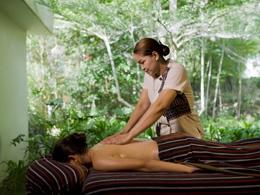
The Global Wellness Institute said the local wellness experience is anchored in hilot, the traditional Filipino healing massage, and in experiences shaped by the country’s beaches, forests, mountains, hot springs and island landscapes. It also highlighted destinations such as The Farm at San Benito in Batangas, Nurture Wellness Village in Tagaytay, Chi at Shangri-La, Tranquila at Las Caidas Wellness Resort in Laguna and Amuma Spa at Bluewater Resort in Cebu as examples of the country’s wellness offering.
That focus on authenticity may prove important as competition intensifies across Asia, where countries are increasingly trying to capture more tourism spending through health, recovery and lifestyle experiences rather than just conventional sightseeing. Thailand, for example, has also been singled out by the institute as a fast-growing wellness market, showing that the Philippines is competing in a regional race, not operating in a vacuum.
For the Philippines, the challenge now is turning momentum into a more durable national advantage.
Tourism officials have spent years trying to move the country up the value chain by packaging its natural assets and cultural identity into more specialized experiences. Wellness fits neatly into that strategy because it can draw higher-spending travellers, support local enterprises, and create demand for everything from resort infrastructure to therapeutic services and fitness programming.
The latest numbers suggest that effort is gaining traction.
The Philippines first appeared as a notable wellness growth story in earlier Global Wellness Institute releases, which valued the country’s wellness economy at $41 billion in 2022 and $43.3 billion in 2023. The jump to $47.3 billion in 2024 shows the sector has continued to expand rather than simply rebound from the pandemic shock.
That distinction matters. A rebound implies recovery to old levels. Continued acceleration
The Philippines’ wellness economy is no longer a niche story. It is becoming one of the country’s bigger economic narratives, with tourism, traditional healing and health-focused travel increasingly positioned at the centre of that rise.
Leave a comment