
Thursday, October 22, 2026 | Today's Newsletter | Login
‘This is the new slavery’
By Mata Press Service
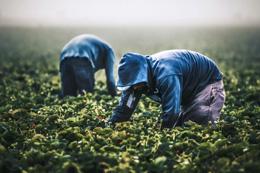
Despite British Columbia having additional laws meant to protect temporary foreign workers, migrant farm workers across the province continue to report abuse, racism, unsafe working conditions and substandard housing, according to a new study.
Based on interviews with 36 agricultural workers conducted during the 2025 growing season, the report from Simon Fraser University challenges the assumption that B.C.’s regulatory framework has meaningfully insulated workers from exploitation.
Migrant labour is central to B.C.’s food system. The province employed 13,452 temporary foreign workers in agriculture in 2024, accounting for roughly 40 percent of its farm workforce, according to federal and Statistics Canada data. Nationally, more than 78,000 migrant workers were employed in agriculture last year, with B.C. representing one of the largest provincial shares
Most agricultural workers in the province arrive through the Seasonal Agricultural Worker Program (SAWP), a federal program that ties workers to a single employer and makes job transfers difficult. While B.C. is unique in having its own Temporary Foreign Worker Protection Act, the SFU researchers say the lived experience of workers reveals a significant gap between legislation and reality.
One of the most striking findings is the prevalence of abuse. One-third of workers reported verbal abuse, while 10 percent reported physical abuse, conditions that meet international indicators of forced labour under International Labour Organization definitions
Researchers note that many workers described abusive treatment as routine rather than exceptional.
“There was a clear normalization of inadequate and harmful conditions,” the authors write, adding that workers often felt they had to endure mistreatment to protect their jobs, housing and future eligibility to return to Canada.
Workers interviewed came from Jamaica, Mexico, Guatemala, Dominica and Grenada, and were employed by farms across the Okanagan and Lower Mainland.
Beyond abuse, workers consistently raised concerns about racism, both in the workplace and in surrounding communities.
“I think migrant workers are treated like we are nobody, like we don’t have rights,” one worker told researchers. “If you speak up, they send you home.”
Several Black Caribbean workers described being treated more harshly than workers from other regions, pointing to complex racial hierarchies within the agricultural labour system itself. Some reported being singled out for discipline or threats of replacement, reinforcing a sense of disposability.
The report emphasizes that racism was not limited to interactions with white Canadians but also emerged across racialized groups within workplaces, compounding vulnerability rather than alleviating it.
Nearly half of all participants reported wage-related issues, including missing overtime pay, delayed wages and discrepancies in piece-rate work
Workers described being reluctant to challenge pay problems because their closed work permits leave them dependent on a single employer. Speaking up, they said, could result in reduced hours, termination or removal from future hiring lists.
Work hours were another flashpoint. Some workers reported mandatory shifts extending up to 18 hours a day, seven days a week during peak harvest periods. Others reported the opposite problem: being hired into oversized labour pools and left with too few hours to earn enough to support families back home.
The result, researchers say, is economic instability regardless of whether workers are overworked or underemployed.
Workplace safety concerns were reported by more than half of interviewed workers, ranging from falls and machinery risks to exposure to chemicals and wildfire smoke.
One quarter of workers raised concerns about pesticide and chemical exposure, often citing a lack of training and protective equipment. Several noted that supervisors wore full protective gear while workers were left unprotected.
Wildfires have emerged as a growing threat. Two-thirds of workers said wildfire smoke affected their working conditions, while about one-third experienced evacuation during fire events, often without compensation or clear safety protocols
The study points to 2023, B.C.’s worst wildfire season on record, as a warning of climate-driven risks that disproportionately impact migrant workers.
Employer-provided housing remains another major concern. One-third of workers expressed dissatisfaction with their accommodations, citing overcrowding, broken appliances, lack of ventilation, unreliable hot water and heat exhaustion during summer months.
Researchers directly observed multiple housing sites and concluded that many fell below provincial and federal standards, despite legal requirements under both federal programs and B.C.’s protection act.
While Ottawa has announced new housing standards for temporary foreign workers set to take effect in 2027, the report questions whether conditions will improve without stronger inspection and enforcement mechanisms.
A recurring theme across interviews was a lack of awareness of worker rights. Many workers said they were never properly informed about employment standards, benefits or complaint processes.
“The system works because fear does the enforcement for employers,” the authors note. “Workers know that their job, housing and future access to Canada can disappear with a single complaint.”
The SFU team argues that reform efforts must move beyond legislation and focus on enforcement, education and power imbalance.
Among their recommendations: anonymous reporting systems, stronger anti-retaliation protections, mandatory anti-racism training for employers, more frequent housing inspections, and sustained outreach to educate workers about their rights.
Most critically, the authors urge governments to formally include migrant workers in policy consultations.
“As long as programs are designed around labour supply rather than lived experience,” the report concludes, “exploitation will remain embedded in the system.”
Leave a comment